Skip to content
Colin Sephton Author

Writing and Art by Colin Sephton

  • Home
  • Amazon Author Page
  • Colin’s Blog
  • Free Resource Vault
  • Fine Art
  • Fantasy Art
  • Etsy Shop
  • About Colin Sephton
Colin Sephton Author

Writing and Art by Colin Sephton

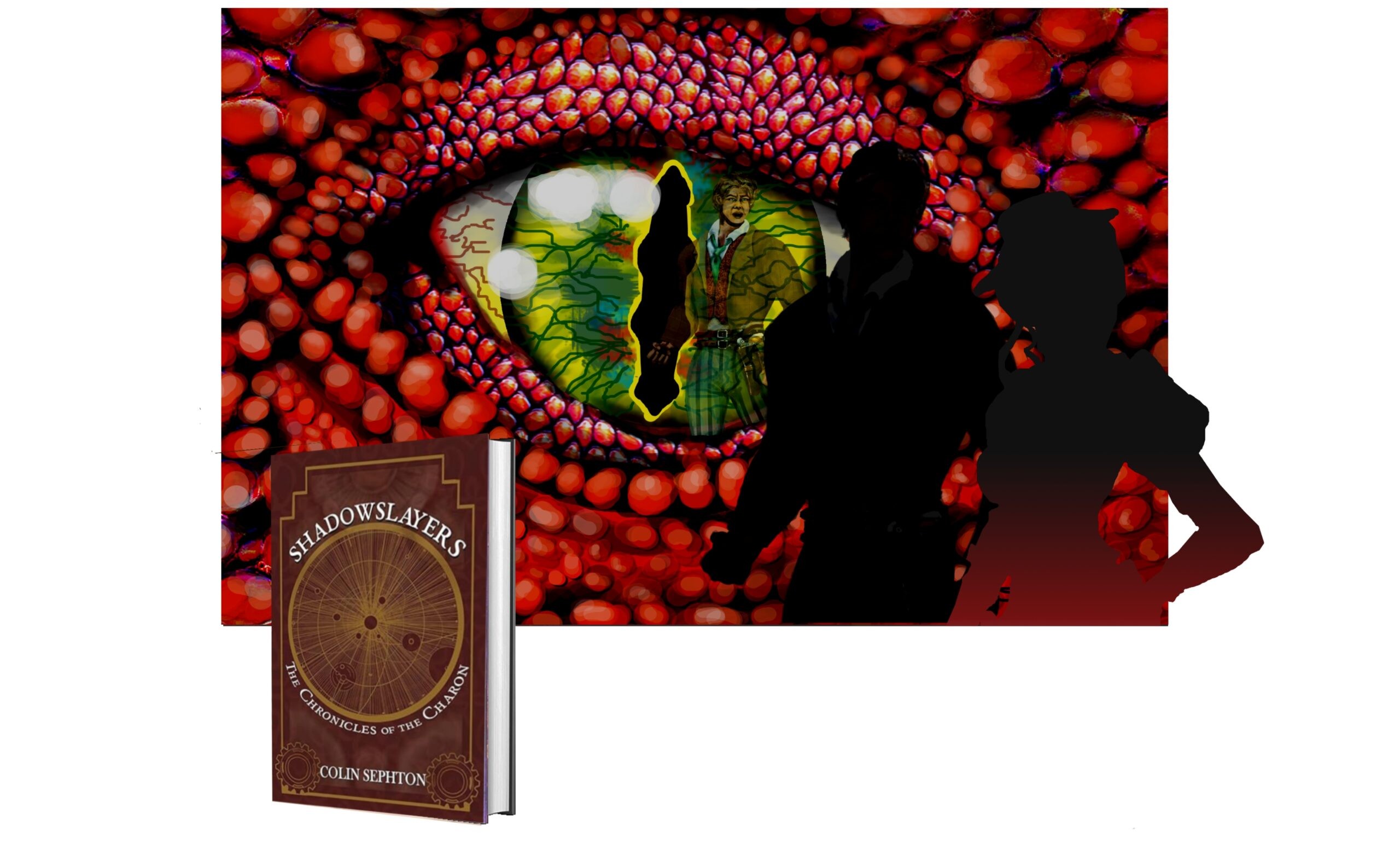
Image from the front cover of the shadowslayers book by Colin Sephton. Used for the shadowslayers review 1 and shadowslayers review 2

Shadowslayers Review 1: This Thrilling Adventure Belongs on Your Reading List

Sephton, September 3, 2025September 25, 2025

In this shadowslayers review, we meet the Union Jacks once more and explore the intricacies of their darkest adventure against unforgiving cosmic forces. This review highlights the importance of understanding the deeper themes within the narrative.

Ignatius and the Weight of Knowledge

For readers who loved the mix of invention and mystery in Timeslayers, Ignatius returns as both brilliant and haunted. His experiments with sound and resonance lead him to develop a weapon unlike anything seen before. However, every breakthrough feels like a gamble with sanity.

He is still the man of science, but after glimpsing gods and travelling the cosmos, he carries the kind of knowledge that no laboratory can contain. Watching Ignatius wrestle with invention, obsession, and visions of cosmic collapse is both thrilling and unsettling, a reminder that progress often comes with a price.

His journey through the cosmos in the first book has left scars, visions, time glitches, and an awareness of realities beyond human comprehension. His tinkering with sonic weaponry and experiments with resonance reveal both brilliance and obsession.

Ignatius embodies the theme that knowledge is never neutral. Every discovery is a double-edged blade, capable of defending humanity yet also opening doors to chaos. Through this Shadowslayers review, Indigo’s character is further explored and praised.

Indigo Gemstone: The Warrior in Fractured Worlds

If Ignatius grapples with ideas, Indigo must fight for survival. In this instalment, she is ambushed, kidnapped, and forced into confrontation with Skoto, duplicitous twins born of the splintered cosmos. Indigo’s resilience is tested not just physically but existentially.

She questions the meaning of duty, yet her determination to rise again, armed and unyielding, confirms her as the saga’s core of strength. Indigo represents humanity’s ability to resist gods and demons alike, not with omniscience, but with willpower, strategy, and sheer endurance.

Indigo’s strength isn’t just physical. Readers see her shaken by despair, questioning her role, and even wondering if the fight is worth continuing. And yet she rises again, weapon in hand, mind sharpened, ready to face both gods and men.

For many readers, Indigo will stand out as the series’ emotional core: resilient, flawed, and unyielding. This Shadowslayers review underscores the implications of the Union Jacks’ actions and captures the essence of the conflict between myth and reality.

Skoto and the Multiplication of Shadows

The human element in this Shadowslayers review truly resonates with readers. Where the first novel gave us Skye’s tragic curse, Shadowslayers introduces Skoto, duplicating, taunting embodiments of the chaos unleashed when time fractured.

They accuse Indigo of murder, hint at masters more terrible than themselves, and reveal the existence of the Book of Shadows. Their presence deepens Sephton’s recurring theme: that power, once unleashed, breeds echoes, copies, and distortions.

Just as the cosmos has split into shards, so too has opposition multiplied. Shadows are no longer singular; they are legion.

The Union Jacks and the Peril of Progress

This shadowslayers review emphasises the complex interplay of characters and themes that define the narrative, making it a must-read for fans of cosmic fantasy and steampunk.

Colin Sephton’s Shadowslayers review is a testament to his unique storytelling ability. The Union Jacks remain the steampunk counterpoint to the mythic Omnisoul and the Charon. However, in Shadowslayers, their tools grow more dangerous.

Ignatius’s creation of the sonic blaster shows human ingenuity at its sharpest edge. Yet the blurred line between invention and destruction mirrors the fractured sky over Oxford.

Sephton continues to suggest that machines, like gods, can overwhelm their makers. The Union Jacks symbolise humanity’s ceaseless drive to innovate, even when the cost may be unbearable.

When Myth Bleeds into Reality

Perhaps the most striking evolution in Shadowslayers is how the characters struggle to live after having faced gods. Indigo’s disillusionment, Ignatius’s visions, and the everyday eeriness of a splintered sky show that the greatest battles are not always with blades or books but with meaning itself.

The novel asks: what does duty mean when you know the universe is infinite and fragile? How does one return to a desk, a street, or a normal life after confronting the Well at the Centre of Time?

The Human Cost of Cosmic Struggle

For all its grand imagery—blood-drawn runes, subterranean libraries, cosmic sitars—the heart of Shadowslayers lies in its characters. Ignatius risks madness with every experiment. Indigo nearly succumbs to despair before clawing her way back to resolve.

Skoto’s duplicity reflects the danger of identity itself in a fractured universe. Sephton insists that progress, whether driven by gods or machines, always demands a human toll.

Conclusion: Shadows in the Age of Steam

Shadowslayers builds on the foundation of Timeslayers, intensifying its blend of myth and machinery. It is a story of gods who manipulate time, of machines that sing the cosmos into motion, and of human agents who must navigate both.

By thrusting Ignatius and Indigo into even darker trials, Sephton shows that the fight for balance between science and myth, between despair and hope, is endless.

In a world where even shadows multiply, what remains unshattered is the human will to resist. Shadowslayers is everything a sequel should be: bigger in scope, darker in tone, but always grounded in the struggles of its characters.

Ignatius and Indigo may walk streets filled with steam engines and gods, but their journey is one readers will recognise, finding meaning, courage, and hope when the world feels impossible.

If you loved the first book, Shadowslayers will grip you even tighter. If you’re new to the saga, this is the perfect time to dive in.

Colin Sephton’s Shadowslayers – From the Chronicles of the Charon pushes deeper into the saga he began in Timeslayers, expanding the collision of cosmic fantasy and steampunk imagination.

Where the first book balanced myth with the engines of empire, Shadowslayers sharpens the stakes: reality itself has splintered, the cosmos echoes with the power of gods, and humanity’s tools of science become both salvation and peril.

It is the kind of sequel that doesn’t just continue a story; it widens it, deepens it, and dares its characters (and readers) to face even bigger questions.

At the centre once more stand Isambard Ignatius and Indigo Gemstone, Union Jacks agents who can no longer look at the world, or themselves, the same way again. They are caught between loyalty to the Empire and the impossible burden of cosmic truth.

Link to Amazon
Next Post …

Discover more from Colin Sephton Author

Subscribe to get the latest posts sent to your email.
Book Blogs

Post navigation

Previous post
Next post

Related Posts

Shadowslayers: A Multiverse Thriller Unveiled – Review April 2026

April 15, 2026July 15, 2026

Shadowslayers is exactly the kind of genre bending cosmic adventure that fans of British sci…

Read More
Book Blogs Timeslayers award-winning fantasy novel by Colin Sephton

Timeslayers Review 3: What Happens When Proven Knowledge becomes Transformative?

November 5, 2024October 20, 2025

Sephton’s novel shows that ultimate knowledge carries ultimate risk. The Book of Consciousness tempts scholars,…

Read More
Book Blogs Poster showing the cover of the latest book by Colin Sephton. Promotion for his latest virtual book tour

Soulslayers: Book Tour 2025 – The Fascinating Final to the Trilogy

November 16, 2025November 16, 2025

Soulslayers – Book bloggers and interviewers have been engaging with the author to gain deeper…

Read More

Fresh Off the Press: My Latest Blogs

Head and shoulders picture of Author Colin Sephton smiling to encourage you to subscribe
  • Why Fantasy Needs Philosophy AgainSeptember 20, 2026
  • George Lucas, Narrative Art and the Mysteries of LifeSeptember 12, 2026
  • Star Wars is Mythology for the Modern Technological Age.September 5, 2026
  • How Ancient Myth Became Science FictionAugust 30, 2026
  • Have The Mythological Gods Changed?August 23, 2026
  • Are We Living Inside a Universal Mind?August 19, 2026

Don’t Miss Out — Join Now!


Revealing Moments: My Author Interview with the Publishers


Connect With Me Across the Web

  • Amazon
  • Goodreads
  • Instagram
  • TikTok
  • Facebook
  • Etsy
  • DeviantArt

Discover My World on IG @timeslayers

Would you want to know your future if you had the chance? It sounds tempting. But imagine knowing exactly what was going to happen—and knowing that you couldn’t change it. Would your choices still have meaning? The tension between fate and free will appears again and again in mythology. From the Greek Fates to the Norse Norns, human beings have imagined forces that weave the pattern of our lives. It’s also a recurring question in philosophy: are we genuinely free, or are our choices determined by everything that came before? These questions have a particular significance in my own fiction, where characters are repeatedly confronted with visions of possible futures and have to decide whether destiny is something to accept, or something to challenge. This is one of the reasons I see fantasy as more than escapism. Fantasy gives us a safe place to explore questions about reality, choice and what it means to be human. I’m exploring these ideas further through the philosophy, mythology and stories behind my novels on my website, sephtonart.com. If you could see your future, would you want to know? #timeslayers #destiny #determinism #freewill #philosophy No words. Just find it hilarious! #timeslayers Over the years I have been inspired by lots of books, artwork and music. From a really young age I was buying Spider-Man and Hulk comics and as I got older I became fascinated with all things cosmic and mythological. So I started to read the Eternals, Thor, Doctor Strange, the Inhumans, Galactus & the Silver Surfer, and Captain Marvel-Vell (when Captain Marvel was a male alien!) Then came Star Wars! I discovered Conan and Elric and the artwork of Boris Vallejo and Frank Frazetta, with the Elric saga becoming my all-time favourite. This and my studies of mysticism, metaphysics and the esoteric, and the world building in my head was such I could use all this to create my own world! #timeslayers #conan #elric #shelfie #inspiration Almost every culture has created heroes. From Achilles and Hercules to King Arthur, from Luke Skywalker to Superman, the characters change, but the questions remain remarkably similar. What do we do when confronted by forces greater than ourselves? What are we willing to sacrifice? Can we overcome our fears? And what might we become through the experience? The interesting thing about mythological heroes is that they aren’t necessarily perfect. Their weaknesses are often as important as their strengths. Perhaps that’s why we continue to reinvent the hero. The ancient hero became the knight. The knight became the pulp adventurer. The adventurer became the superhero. And now the hero can even travel across galaxies. The stories evolve because we evolve. This is part of what interests me about modern mythology and why I believe fantasy and science fiction continue to perform a role that mythology has always performed: giving us stories through which we can explore what it means to be human. It’s also one of the ideas at the heart of The Chronicles of the Charon. Who is your favourite modern mythic hero, and what do they represent to you? Let me know in the comments. And follow for more next week, and checkout my website, sephtonart.com. #timeslayers #mythology #modernmyth #mythmaking #fantasy Who are you? We normally think of identity as something obvious. We have a name, a face, a history and a personality. But look a little closer and things become much more complicated. Your body changes. Your memories change. Your opinions change. Even your personality can change dramatically throughout your life. Yet somehow, you still experience yourself as the same person. So what is this “self” that seems to remain? This is one of the questions that lies beneath much of my writing. My novels explore identity, consciousness, the soul and the possibility that there is more to human existence than the physical world we experience. I’m interested in the space where philosophy, mythology and fantasy meet, and that exploration continues on my website. If you removed your memories, your body and your personality, what would be left? If you enjoyed this, like and subscribe (for free) on my website. #timeslayers #philosophicalfriday #consciousness #soul #existentialism A quick shelfie today. I’m often asked where I get my ideas from for my world building and novels. The simple answer is EVERYWHERE! I have a large collection of books, I can’t pass a bookstore without buying one! Much to my wife’s annoyance! 😁🥰 But the spark of an idea for the Book of Consciousness came from Helena P Blavatsky’s spSecret Doctrine about the Book of Dzyan, a mystical Tibetan text made from palm leaves impervious to the elements. My trilogy, The Chronicles of the Charon incorporates some mythology, philosophy and metaphysics. All the things that keep me up at night! If you like my what you see, give me a follow and there’ll be more world building next week. Or checkout my website, sephtonart.com. #timeslayers #shelfie #worldbuilding #bookstagram #fantasynovel Meet the author… The gods of ancient mythology were powerful beings who embodied the things humans feared, admired and struggled to understand. Thor had his hammer, Hercules had his strength, Athena had her wisdom. Today, our mythology looks different. Superheroes fly. Jedi manipulate the Force. Science-fiction characters travel between worlds and confront powers beyond ordinary human experience. But underneath the technology, costumes and special effects, many of these stories are performing an ancient function. They give us larger-than-life figures through whom we can explore power, morality, sacrifice, identity and the nature of humanity. Perhaps the gods haven’t disappeared. Perhaps we’ve simply reinvented them. This is one of the ideas behind my interest in modern mythology and why I believe fantasy and science fiction can do more than entertain us. They can help us explore the deepest questions about ourselves and our universe. It’s also something I explore through the mythology and world building of my own trilogy, The Chronicles of the Charon. Who do you think is a modern god? Let me know in the comments, and follow me so you can join me next week for another Myth Making Monday OR checkout my website for lots more information, sephtonart.com. #timeslayers #mythmaking #modernmyth #mythology #superheroes

©2026 Colin Sephton Author | WordPress Theme by SuperbThemes