Skip to content
Colin Sephton Author

Writing and Art by Colin Sephton

  • Home
  • Amazon Author Page
  • Colin’s Blog
  • Free Resource Vault
  • Fine Art
  • Fantasy Art
  • Etsy Shop
  • About Colin Sephton
Colin Sephton Author

Writing and Art by Colin Sephton

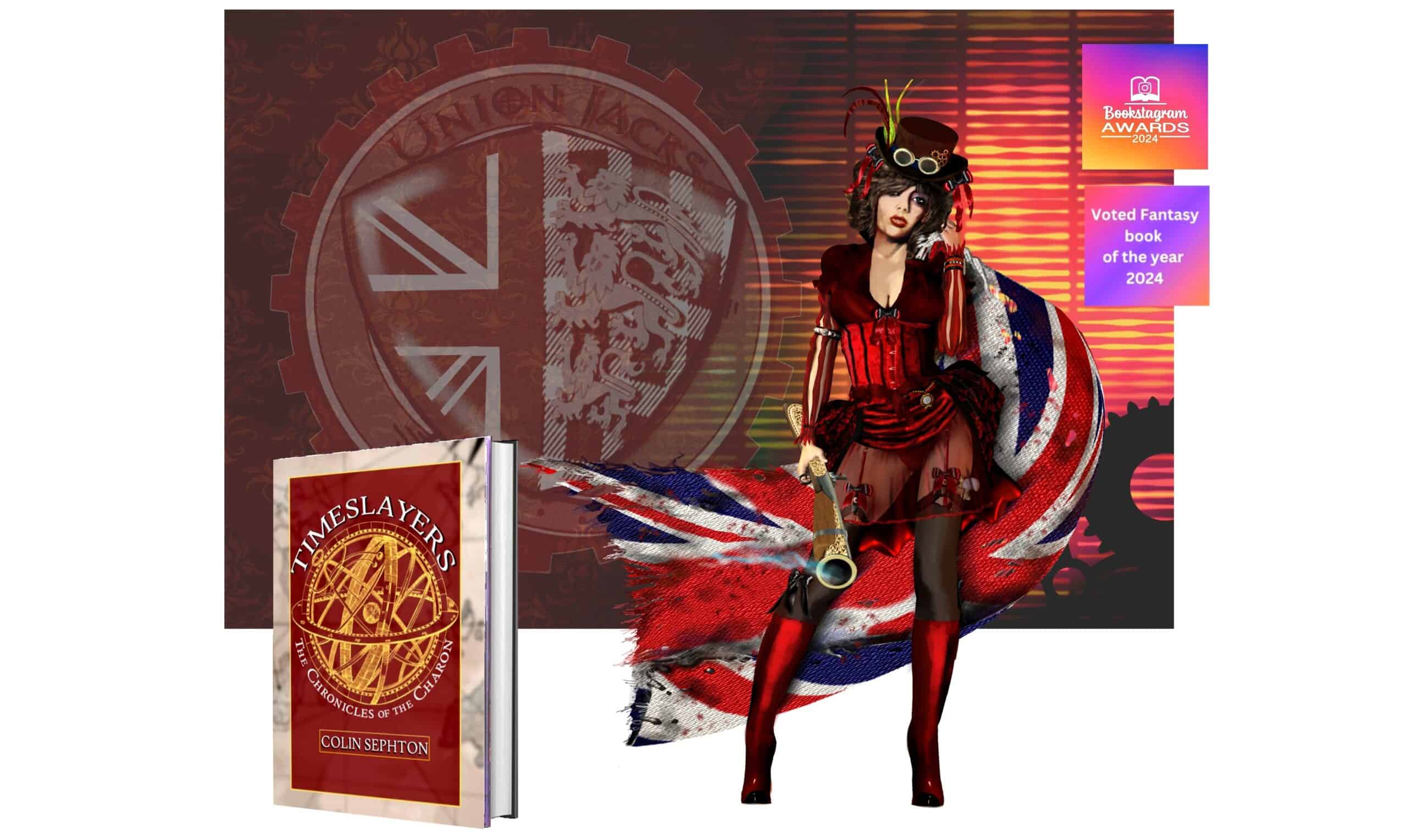
Timeslayers award-winning fantasy novel by Colin Sephton

Timeslayers Review: Do the readers think it has hidden depth?

Sephton, September 3, 2024September 21, 2025

Unveiling the Charon: Light, Darkness, and the Fate of Time in Timeslayers

Timeslayers Review – From the Chronicles of the Charon is more than just another fantasy novel. It is a story that mixes myth, science, and human struggle into a single tale that feels both ancient and modern. Voted Fantasy Book of the Year 2024 by the Bookstagram Awards Community, the novel has gained attention because it does not only tell a story—it asks big questions about time, knowledge, and destiny. To understand its depth, we must explore the Charon, the Book of Turiya, and the characters who face choices bigger than themselves. This Timeslayers Review illustrates the intricate connections between time and the human experience.

The Origin of the Charon and Their Forgotten Legend

In this Timeslayers Review, we delve deeper into the impact of the Charon on the narrative and its themes.

The Charon are not simple shadows borrowed from mythology. In Greek stories, Charon is a single ferryman who guides souls across the River Styx. In Timeslayers, however, the Charon are far greater—seven unholy beings chained for centuries, waiting to be unleashed. They are both terrifying and fascinating, born from forgotten rituals and human mistakes. When they appear, they bring not only horror but also questions about power and balance. Their presence shows us how legends can grow into forces that still influence the present.

This Timeslayers Review also highlights how time itself plays a critical role in shaping the characters’ destinies.

How Time and Human Consciousness Shape the Story

Unlike many fantasy novels that focus only on battles or magic, Timeslayers digs deeper into the nature of time and the human mind. Ignatius, one of the main figures, discovers texts that suggest reality is not fixed. Instead, human consciousness shapes what happens across history. This idea threatens groups like the Administorium, who fear the loss of their control. Through Ignatius’s discoveries and Skye’s obsession with her cursed family line, Sephton shows that the greatest danger comes not from outside enemies but from humanity’s own thirst for forbidden knowledge. Time here is alive—it can be shaped, but it also punishes those who try to twist it.

The Book of Turiya, central to the Timeslayers Review, serves as a key to understanding the conflict and the Charon’s role.

Through these themes, this Timeslayers Review encourages readers to explore the moral implications of knowledge.

Ignatius, Indigo, and Skye—characters highlighted in this Timeslayers Review—represent the struggle between duty and darkness.

The Book of Turiya: Keeper of Eternal Secrets

As we examine the awakening of the Charon in this Timeslayers Review, we understand the consequences posed by their release.

This Timeslayers Review ties the eternal struggle back to the reader’s own life choices and the balance of knowledge and power.

At the center of the conflict lies the Book of Consciousness, also called the Book of Turiya. It is said to be older than the earth itself, indestructible, and alive in ways ordinary minds cannot understand. For Solomon, the scholar who spent his life studying it, the book became an obsession that consumed him. For Skye, it was a chance to free her bloodline from its curse. But opening the book meant opening the door to the Charon. The shifting pages reveal knowledge only when they choose, showing that wisdom cannot be forced. In this way, the book becomes a symbol for the novel’s theme: knowledge is powerful, but in the wrong hands, it destroys more than it saves.

Ultimately, this Timeslayers Review reflects on how the novel stands as a modern classic in fantasy literature.

Ignatius, Indigo, and Skye: Lives Torn Between Duty and Darkness

Fans of fantasy will find much to ponder in this Timeslayers Review, which acts as a reminder of the choices we face.

The cosmic struggle in Timeslayers feels real because it is tied to human characters who face inner battles. Ignatius is caught between curiosity and responsibility, searching for truth while fearing its cost. Indigo Gemstone represents strength shaped by mystery and personal loss, proving that loyalty and courage often come at a price. Skye, however, is perhaps the most tragic of all. Cursed by her bloodline, she longs for freedom but falls deeper into darkness as her desperation pushes her toward betrayal. Through them, Sephton shows that the war between light and shadow is not only in the heavens—it also burns inside the human heart.

The Awakening of the Charon and Its Terrifying Consequences

The turning point of the novel comes when Skye’s actions awaken the Charon. Their release is described in terrifying detail: rivers of blood, writhing forms, and monstrous beings that shift between beauty and horror. These scenes are not only meant to shock—they underline the danger of human obsession. The Charon are unleashed not by fate alone, but by choices made in desperation and arrogance. They remind us that civilizations can collapse when people lose balance between wisdom and ambition.

What the Eternal Struggle Means for Readers Today

Although the novel is set in a steampunk-inspired Oxford filled with airships, automata, and ancient tomes, its message reaches far beyond fantasy. It asks questions that matter even now: What happens when knowledge is pursued without wisdom? How do faith, science, and ambition shape our lives? And what shadows do we unleash when we chase power at any cost? The Charon are terrifying, but they are also mirrors, showing us what we can become when we forget balance and responsibility.

Timeslayers as a Modern Classic in Fantasy Literature

With its blend of myth, philosophy, and vivid storytelling, Timeslayers has secured its place as one of the most unique fantasy novels of recent years. The book’s award and recognition are proof of its impact, but its real strength lies in how it makes readers think beyond its pages. By exploring the Charon, the Book of Turiya, and the fragile choices of its characters, Colin Sephton has written more than a story of fantasy—he has created a reflection of human history, fear, and hope.

For fantasy and sci-fi fans, Timeslayers is more than just a tale to enjoy. It is a reminder that every age faces its own Charon, and that the choices we make decide whether light or darkness shapes our future.


Discover more from Colin Sephton Author

Subscribe to get the latest posts sent to your email.

Book Blogs

Post navigation

Previous post
Next post

Related Posts

Book Blogs Banner from the virtual booktour for Shadowslayers, showing the front cover of the book

Shadowslayers: Virtual Book Tour 2025 – More Secrets of the Trilogy revealed

September 11, 2025September 25, 2025

Book bloggers and interviewers have been engaging with the author to gain deeper insights into…

Read More

The Philosophy of the Sword and the Soul

October 11, 2026October 11, 2026

“Arthur was ware of an arm clothed in white samite, that held a fair sword…

Read More
Book Blogs

Soulslayers Review 1: “This novel is one of the genre’s boldest voices”

November 8, 2025November 9, 2025

In this Soulslayers review we can conclude that for readers drawn to the crosscurrents of…

Read More

Comment

  1. Pingback: The Emerald Tablet: Myth, Meaning and Mystery

Comments are closed.

Fresh Off the Press: My Latest Blogs

  • Dune: The Ancient Mysticism and Philosophy Behind Frank Herbert’s Modern Mythology Part 2November 8, 2026
  • Dune: The Ancient Mysticism and Philosophy Behind Frank Herbert’s Modern Mythology Part 1October 31, 2026
  • The Emerald Tablet: The Myth, the Mystery and the Secrets of the UniverseOctober 25, 2026
  • Sacred Rings, Amulets and Talismans: Why Small Objects Possess Enormous PowerOctober 18, 2026
  • The Philosophy of the Sword and the SoulOctober 11, 2026
  • From the Book of Dzyan to TimeslayersOctober 4, 2026

Don’t Miss Out — Join Now!


Revealing Moments: My Author Interview with the Publishers


Connect With Me Across the Web

  • Amazon
  • Goodreads
  • Instagram
  • TikTok
  • Facebook
  • Etsy
  • DeviantArt

Discover My World on IG @timeslayers

I believe we are missing something from today’s fantasy literature. So I have written a speculative fiction trilogy, the Chronicles of the Charon, Timeslayers, Shadowslayers & Soulslayers, that is a cosmic adventure and an exploration of consciousness, time, identity, and free will. My two heroes travel the cosmos to battle Demons and gods and along the way discover the nature of reality, their true selves and they embark on a journey of the soul. If this appeals to you then please read it. Go on, give it a go! #timeslayers #speculativefiction #fantasy #goldenage #souljourney IS THE FORCE A GOD? What exactly is the Force? In Star Wars, it connects all living things and permeates the universe. But its underlying idea has interesting parallels with ancient Eastern philosophy. Consider Brahman in Hindu philosophy, the ultimate reality underlying existence. Or the Tao in Taoism, the fundamental principle underlying the natural order of the universe. These aren’t identical concepts, but they raise fascinating questions about the nature of reality, consciousness and our place within the cosmos. Perhaps this is one reason Star Wars has become more than a science-fiction saga. It has become a modern mythology. This is territory I explore in my own fantasy trilogy, The Chronicles of the Charon, where consciousness, creation and the underlying structure of reality are central to the mythology. I’m interested in how ancient philosophical ideas can inspire entirely new worlds and stories. Do you think the Force is closer to a god, a universal energy, or something beyond both? Discover more about modern mythology and the philosophy behind my novels through my website - sephtonart.com. I explore these ideas in my blog and essays, so if you’re interested, sign up and follow me for more Myth Making Monday! #timeslayers #starwars #mythology #modernmyth #philosophy On the blog today. Dune: The Ancient Mysticism and Philosophy Behind Frank Herbert’s Modern Mythology Part 2. Check out my website sephtonart.com. #timeslayers #modernmythology #dune #frankherbert #ontheblogtoday Are you the main character of YOUR novel, or series? I didn’t realise until I’d finished writing my trilogy, The Chronicles of the Charon (Timeslayers, Shadowslayers & Soulslayers), that the main characters all have traits inherited from me! I guess that may be natural, I don’t know. But it did come as a bit of a shock to me when I realised! What do YOU think? Please let me know in the comments! For more info about my novels visit my website, sephtonart.com. #timeslayers #fantasynovel #authorlife #authorgram #authorjourney Are Good and Evil Absolute? We often talk about good and evil as though they are fundamental properties of the universe. But are they? Philosophers have debated this for centuries. Moral realists argue that certain things are objectively right or wrong, regardless of what anyone believes. Moral relativists argue that our understanding of morality is shaped, at least partly, by culture, history and society. But here’s an interesting thought: if there were no human beings, would morality still exist? Would cruelty still be wrong? Would compassion still be good? Or are these concepts meaningful only because conscious beings exist to experience them? I find these questions particularly interesting when exploring the nature of good and evil in fantasy. In The Chronicles of the Charon, morality, power, consciousness and the nature of existence are all interconnected. For me, fantasy offers a way to explore philosophical questions on a cosmic scale. Do you believe good and evil are universal truths, or are they human inventions? Let me know what YOU think in the comments. Follow and join me next week for more. And check out my website - sephtonart.com. #timeslayers #philosophicalfriday #philosophy #moralphilosophy #speculativefiction Welcome to another World Building Wednesday. Instead of looking at some of my art I thought this week I’d do an overview of my trilogy the Chronicles of the Charon. I write speculative fiction/fantasy. It’s not a simple fantasy story. It’s a journey through the minds of my heroes, Ignatius and Indigo to examine how they manage knowledge about the cosmos and consciousness and how they navigate their relationship which may just be love as a result of shared trauma. It’s also a journey of the soul as they obtain deeper understanding of the mechanisms that bind us and the cosmos together. If you haven’t read my trilogy yet, then go on, give it a go! For more information visit my website sephtonart.com, and subscribe to my blog which will be sent to you once a week. #timeslayers #speculativefiction #souljourney #cosmicadventure #fantasylovers A shout out to all readers of SPECULATIVE FICTION. I’ve created a world for you to enjoy. Two protagonists, a logical, methodical hero and a strong spiritual heroine. There some magic, gothic horror (just a bit), a struggling, cool love relationship, ancient wisdom, secret societies, a soul journey and forbidden knowledge. If you haven’t read the Chronicles of the Charon, go on, give it a go! #timeslayers #speculativefiction #darkfantasy #makeyouthink #fantasyreader DUNE: THE MOST DANGEROUS WEAPON IS A MYTH. Frank Herbert’s Dune is much more than a science-fiction adventure. It’s a fascinating exploration of mythology, religion, prophecy and political power. One of the most intriguing ideas in the novels is the Bene Gesserit’s Missionaria Protectiva: a programme that plants religious beliefs and prophecies among different populations, creating expectations that can later be exploited. Paul Atreides finds himself caught up in a prophecy that was deliberately manufactured long before his birth. It’s a brilliant idea because it raises an uncomfortable question: Do we create our myths, or do our myths end up controlling us? This is one of the reasons I consider Dune an example of modern mythology. Mythology isn’t simply about ancient gods and forgotten civilisations. It’s also about how stories shape our understanding of reality, influence societies and give meaning to human existence. These are ideas I explore in my own fantasy trilogy, The Chronicles of the Charon, where mythology, consciousness, philosophy and cosmology come together to create an entirely new fictional mythology. I believe we can still create myths today. What other fictional story do you think has the power of an ancient myth? Let me know in the comments.

©2026 Colin Sephton Author | WordPress Theme by SuperbThemes